
The Black Hole
What are the characteristics of a black hole?
Black hole or energy hole as we called it in our belief system, is the source of energy, space and time. This is quite a contrast to the current understanding in our scientific community. Currently scientists postulate that a black hole sucks/pulls things into its center. We believe it is the opposite – a black hole actually spews out energy/matter from its core. It not only spews matter/energy, black hole is also the source of space and time.
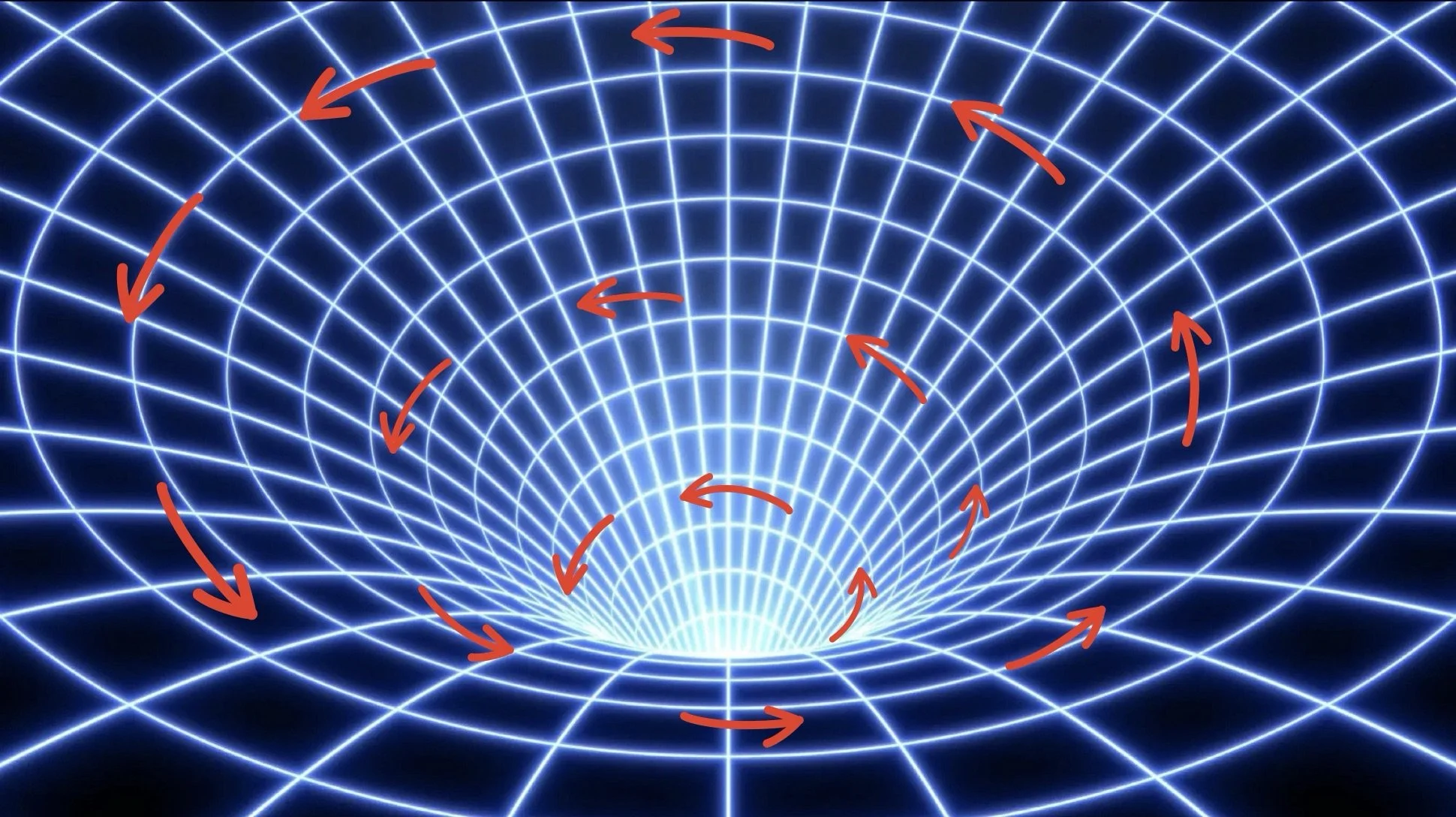
The 4 dimensional space-time fabric is actually spun out through the black hole. So every thing in this universe originated from the center of black holes.
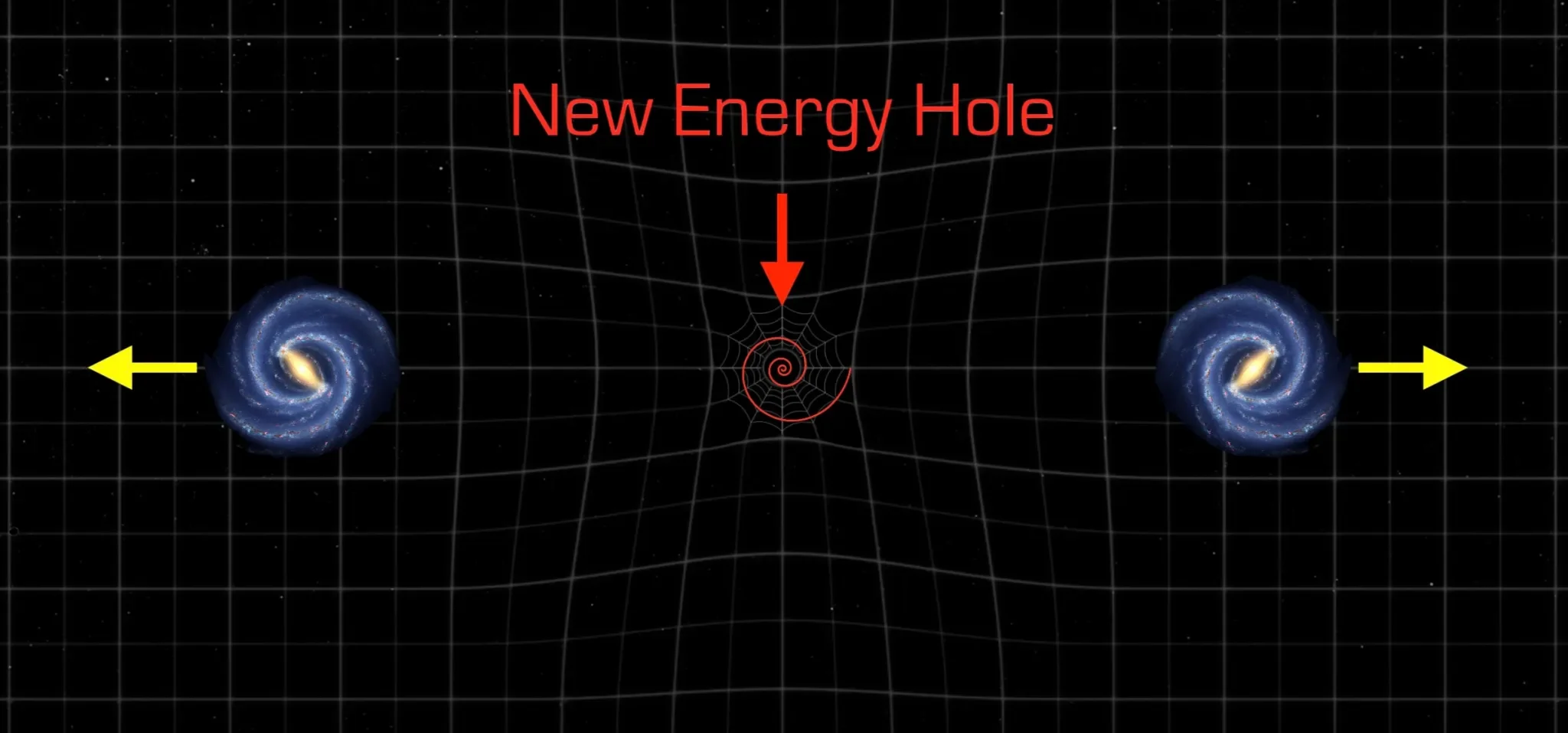
Every black hole as it spins, create additional space-time fabric that results in the expansion of the universe. The expansion of the universe or the expansion of universe’s space-time is directly created by all the black holes in the universe.
How does a black hole look like from up close?
Let’s imagine if we could travel to the center of our Milky Way galaxy, and stand next to the black hole. How big is the black hole? The black hole would be smaller than the tip of a needle, it would actually be invisible to the eye, because it is an infinitely small hole.
All the energies that make up the hundreds of billions of stars and planets we see in the Milky Way were extruded out through that tiny black hole located at the center of our Milky Way. In other words, a black hole that is smaller than the tip of a needle spews all the energy/matter making up all the stars, planets in our galaxy. The force of the energy that is extruded through a black hole creates the most powerful object in the universe – and we know it as a quasar.
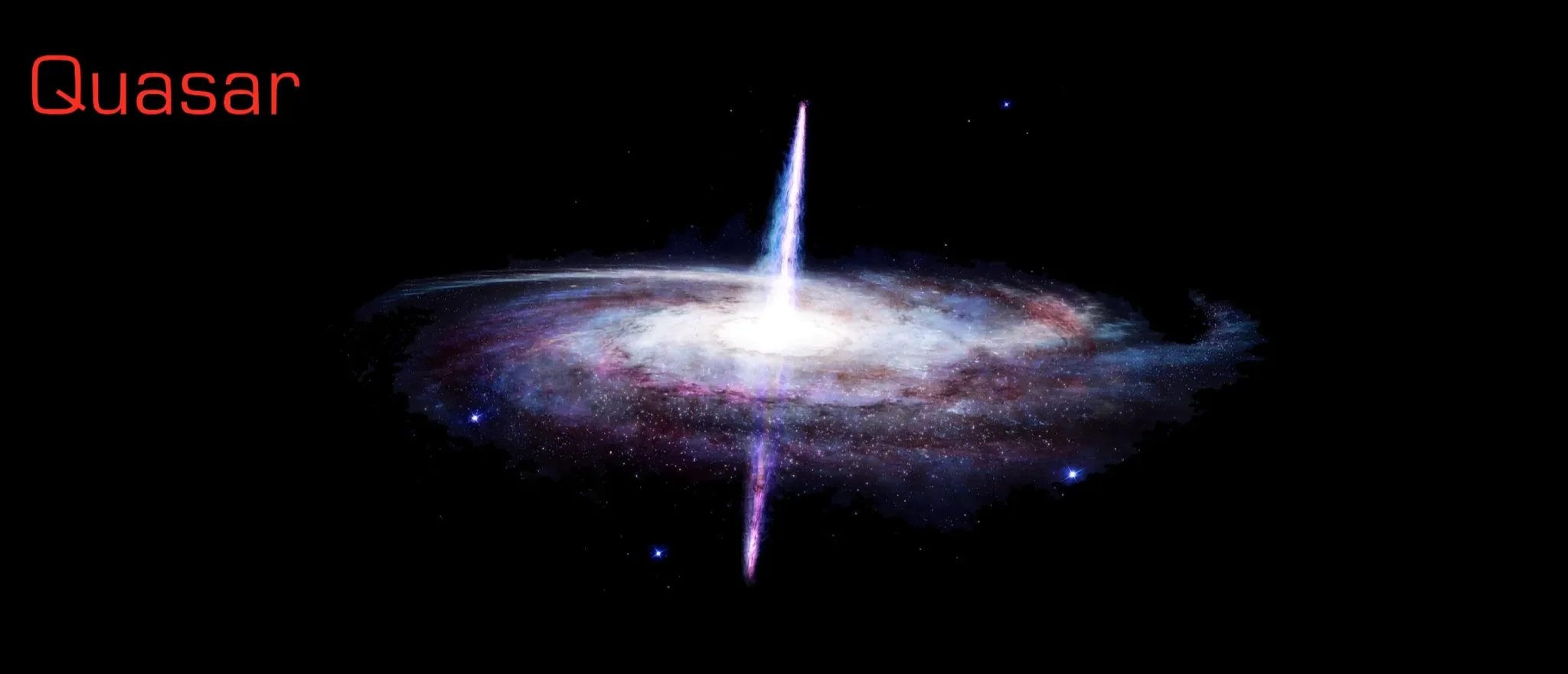
A quasar is a black hole that is spewing massive amount of energy during the early formation stage of a galaxy. The force and torque generated at the center of the black hole is so extreme and powerful that the energy it ejects travels outward hundreds of thousands of light years into space in opposite directions.
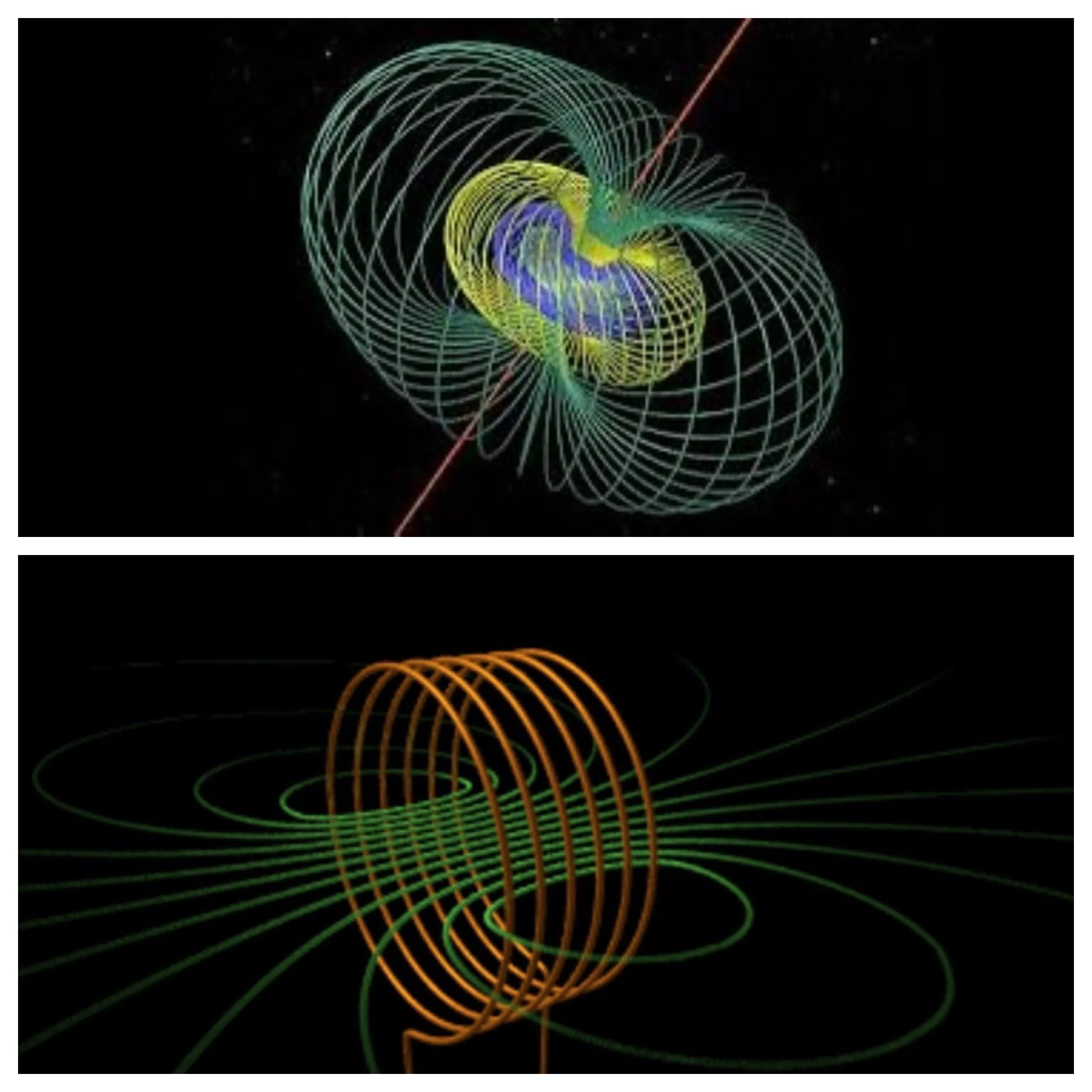
A black hole is akin to a super massive solenoid that ejects electromagnetism, while spinning at an enormously high velocity and torque. The jets of energy emit outward at the top and bottom of a solenoid corresponds to the two jets extending outward at the top and bottom of a quasar.

The black hole is the birth canal where God pushes a new born galaxy into existence/universe.
Black hole’s role in the uniformity of our universe:
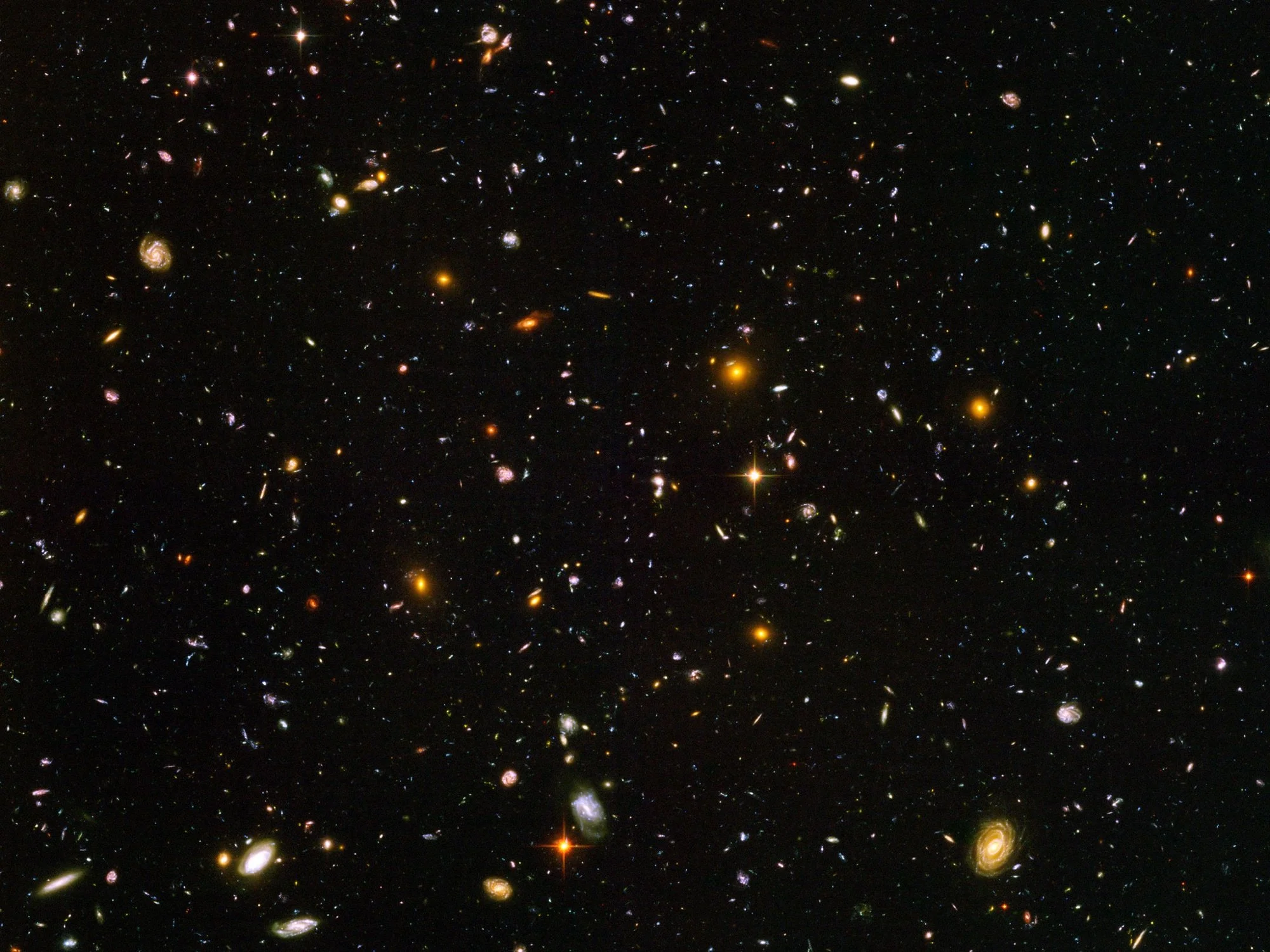
Currently, scientists are not clear on why our universe is so uniform across the sky. Everywhere we look, the universe looks about the same, with the same density of galaxies stretching across every part of the universe.
Based on the current Big Bang model – if everything originated/expanded from a single point could not have produced such a uniform universe like we see today.
However, under the cosmological model proposed in our belief system would reasonably explain why our universe appears so uniform. The answer has to do with our understanding of the black hole.
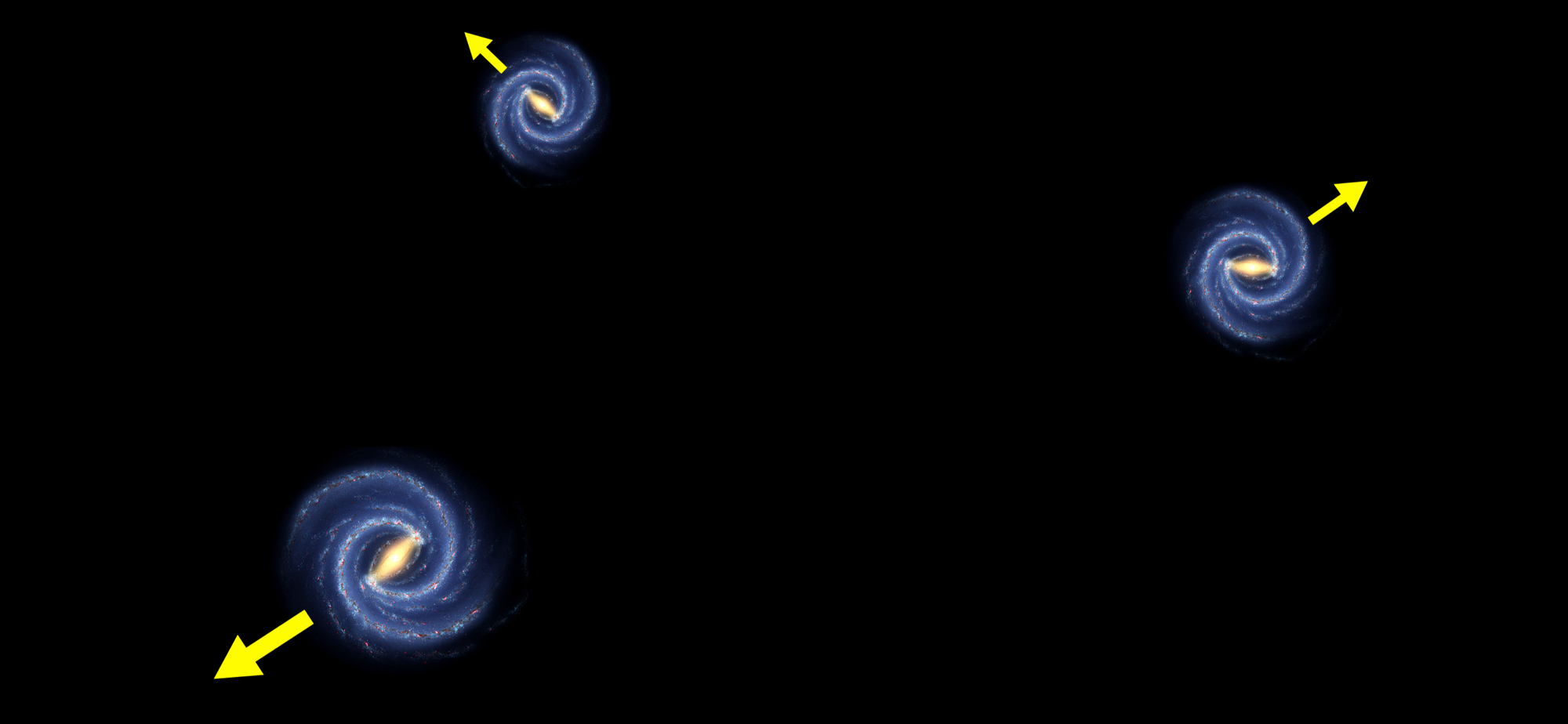
We now know for certain that our universe is expanding, this was discovered by Edwin Hubble in 1929. The expansion of the universe results in the expansion of the space time fabric, causing the galaxies to stretch apart from each other.
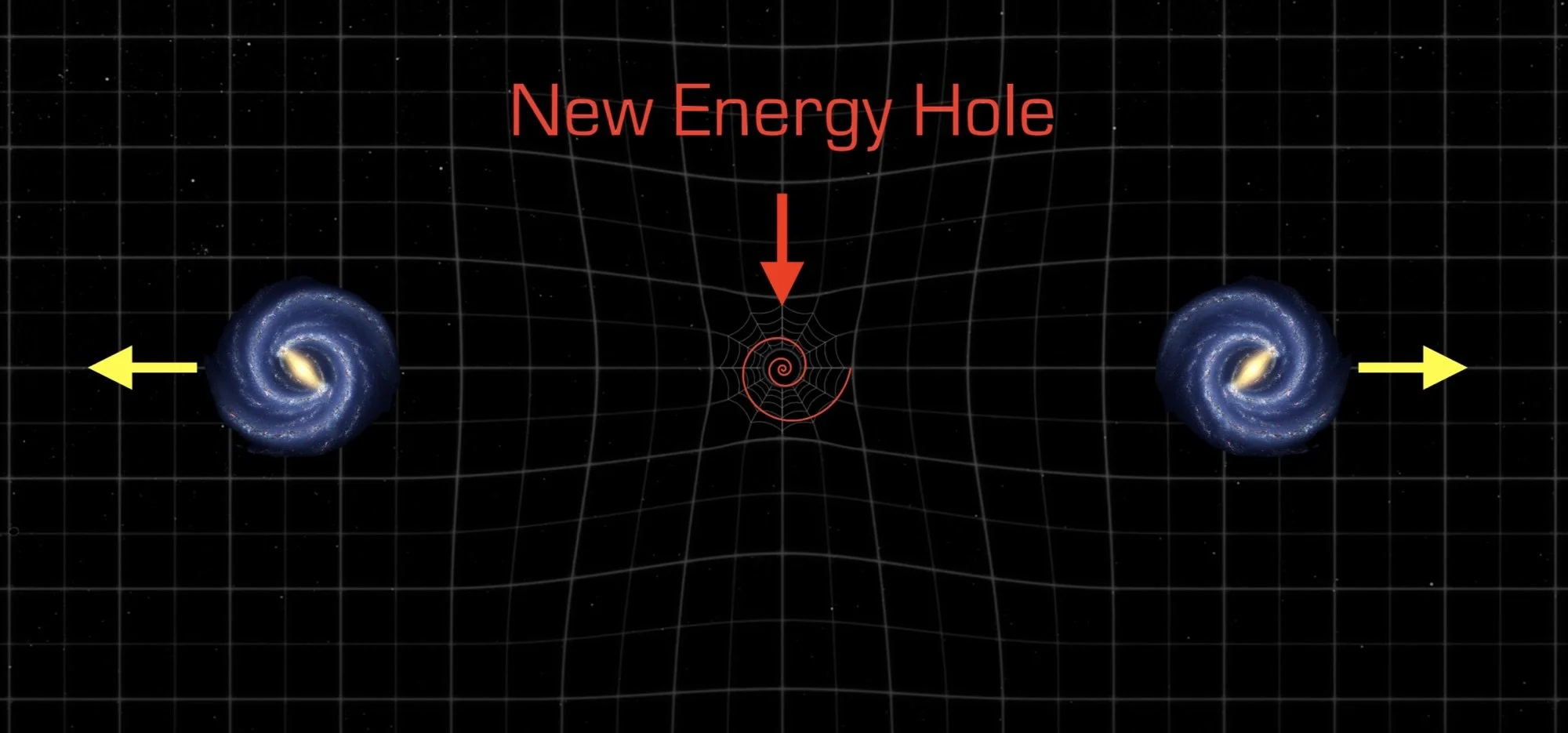
When neighboring galaxies move apart, space-time fabric between them becomes stretched, and when the fabric is stretched enough, a tear in the fabric is formed to allow a new black hole (energy hole) to come into existence and thus resulting in the creation of a new galaxy.
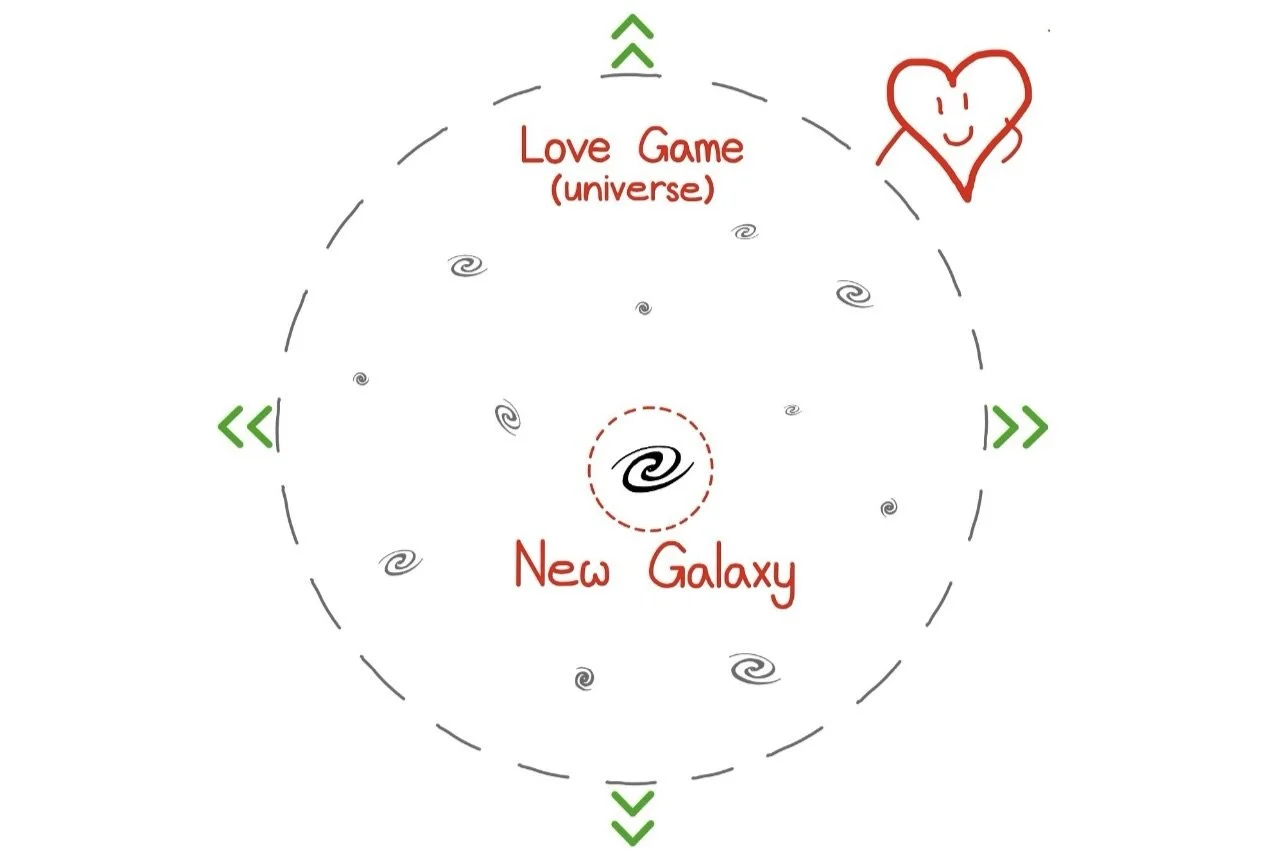
This newly formed galaxy, would fill in the void created by those neighboring galaxies that moved away from each other.
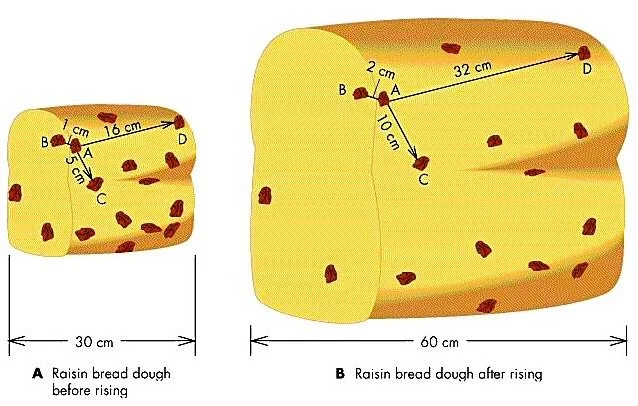
Think of a loaf of raisin bread baking in the oven. In the beginning, the raisins are close together. As the bread is being baked, every raisin begins to move apart from each other as the bread expands and rises. Imagine the raisins being the galaxies.
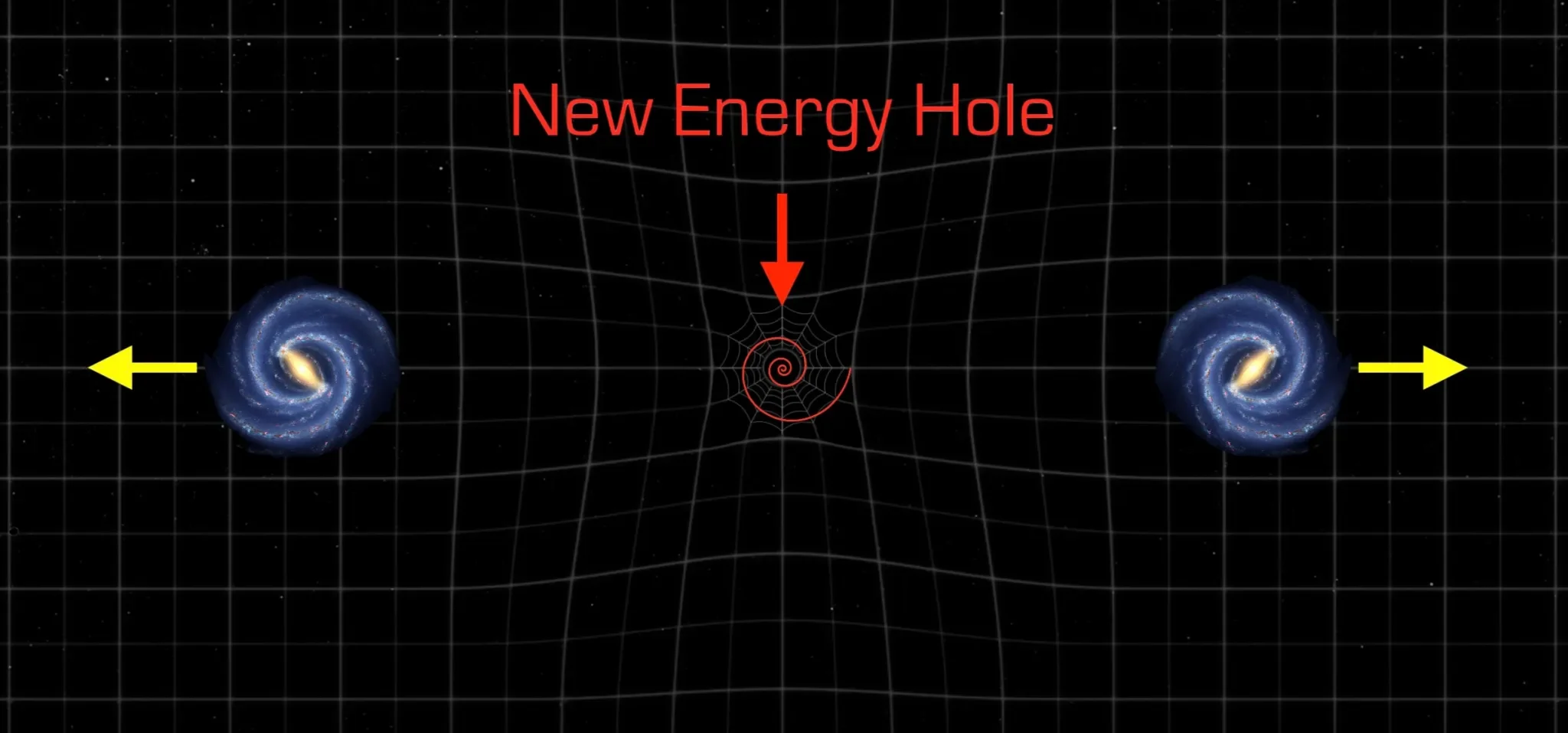
As the galaxies move apart from each other, more distance is created between them, then a new galaxy would pop into existence in between them through the newly formed black hole to fill in the void. This process of expansion would result in a uniform universe like we see it today, and thus explaining the reason for its uniformity.
On a related note:
Cosmologists are looking for dark energy or dark matter. The reason they are looking for this mysterious energy is because they think there has to be some underlying reason for the expansion of the universe, therefore, they came up with the idea of some undetectable mysterious energy that’s responsible for pushing apart the universe. In other words, the universe is expanding, thus they think that there has to be some energy that’s driving the expansion. Thus far, we have not detected a trace of dark energy/matter, so is there such thing as dark energy/dark matter?
No, dark energy/dark matter do not exist. This misunderstanding has to do with our understanding of the black hole. If we put black hole as the source that produces spacetime fabric that drives the expansion of the universe then there is no need to insert dark energy into the equation to explain the cause of the expansion. The expansion of the universe is driven by black holes.
On another related note:
Currently, scientists are puzzled by the fact that the outer stars in galaxies orbit the galactic center at unexpectedly high speeds, and this phenomenon has led to one of the challenges in astrophysics.
According to the laws of Newtonian mechanics and gravity, stars farther from the center of a galaxy should orbit more slowly than those closer to the center, similar to how planets in our solar system orbit the Sun. For example, in our solar system, the farther a planet is from the Sun, the slower its orbital speed.
However, when astronomers measured the speed at which stars orbit in the galaxies, they discovered that the stars in the outer regions of galaxies were moving much faster than expected.
So why are the stars moving faster at the outer edges of galaxies? The answer again has to do with our understanding of the black hole. To explain this, let’s visualize a revolving restaurant.
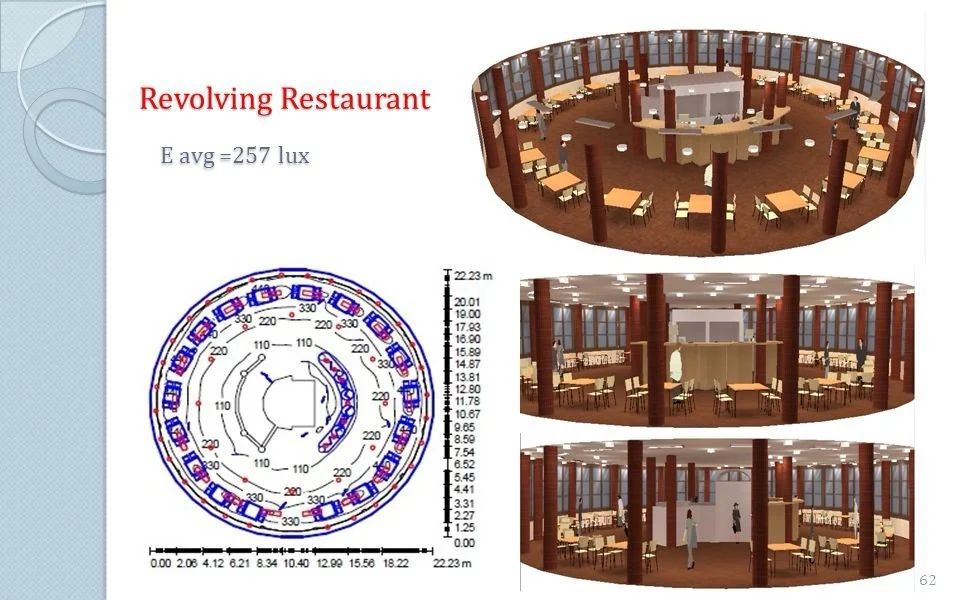
Imagine the revolving restaurant is the galaxy that spins. The floor of the restaurant spins/revolves around the center. Imagine the people sitting in the restaurant are like the stars orbiting in a galaxy. The people sitting at the outer edges of the restaurant are going to be traveling at a faster speed than those who are sitting at the center of the restaurant. Similarly, the stars located at the outer edges of the galaxy are moving at a faster speed than the stars that are at center of the galaxy.
The key here is to think of the floor that the stars sit on is moving underneath them and thus carrying the stars along. The floor in this case is the spacetime fabric that the stars in the galaxy sit on, and this spacetime fabric is spun out by the black hole.
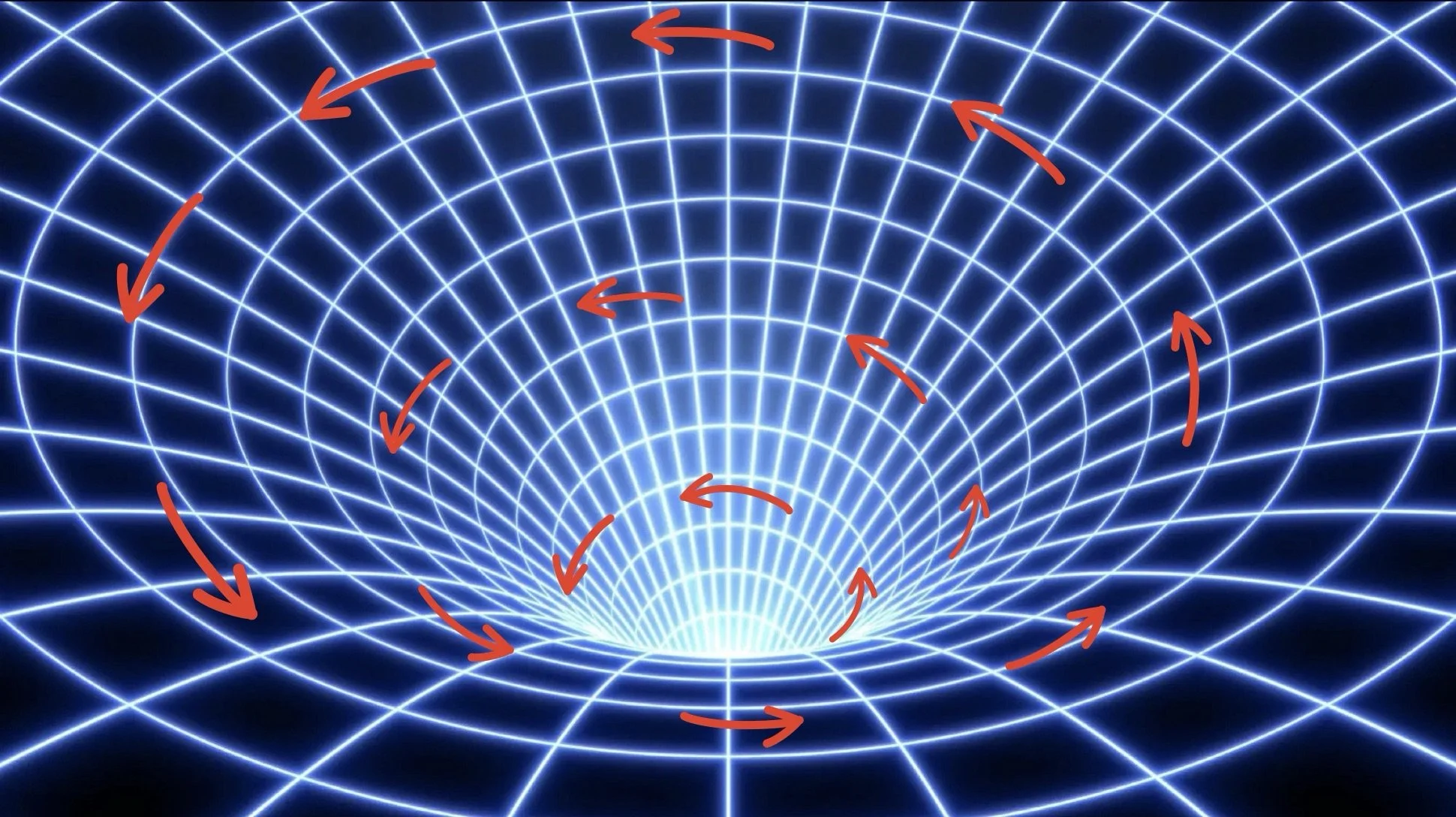
As mentioned earlier, the black hole is constantly creating spacetime fabric from its center resulting in the expansion of the universe. As spacetime fabric is spun outwards, it carries the stars along with it like the people in the revolving restaurant get carry along with the moving floor.
The cause for stars spinning around a black hole in a galaxy is different from the planets that revolve around a star in a solar system. The first is caused by the expansion and spin of the spacetime fabric carrying the orbiting stars along, while the latter is due to the effect of gravity. This is why scientists are puzzled by the unexpectedly fast speed of stars at the outer edges, because they have mistakenly linked the cause of the orbiting of stars around the black hole with gravitation, which is not the case here. The law of gravitation is not what is governing the stars orbiting the black hole in a galaxy.
Also, it’s worth to point out that black holes are massless. Although this is contrary to what the scientists theorize today, black holes we believe do not have mass. When there is no mass, there is also no gravity because we know that in order to have gravity, there has to be the presence of mass – because mass is what causes the curvature of spacetime fabric that results in what we see as gravity. But unlike the star at the center of a solar system, the black hole at the galactic center does not have mass, and thus it does not create the effect of gravitation on the orbiting stars.
In conclusion, using the understanding of black holes based on the cosmology in our belief system, we can reasonably explain why stars at the outer edges of galaxies are traveling faster than expected, and thus solving this mystery in science and cosmology today.